 Nurse Learning Hub
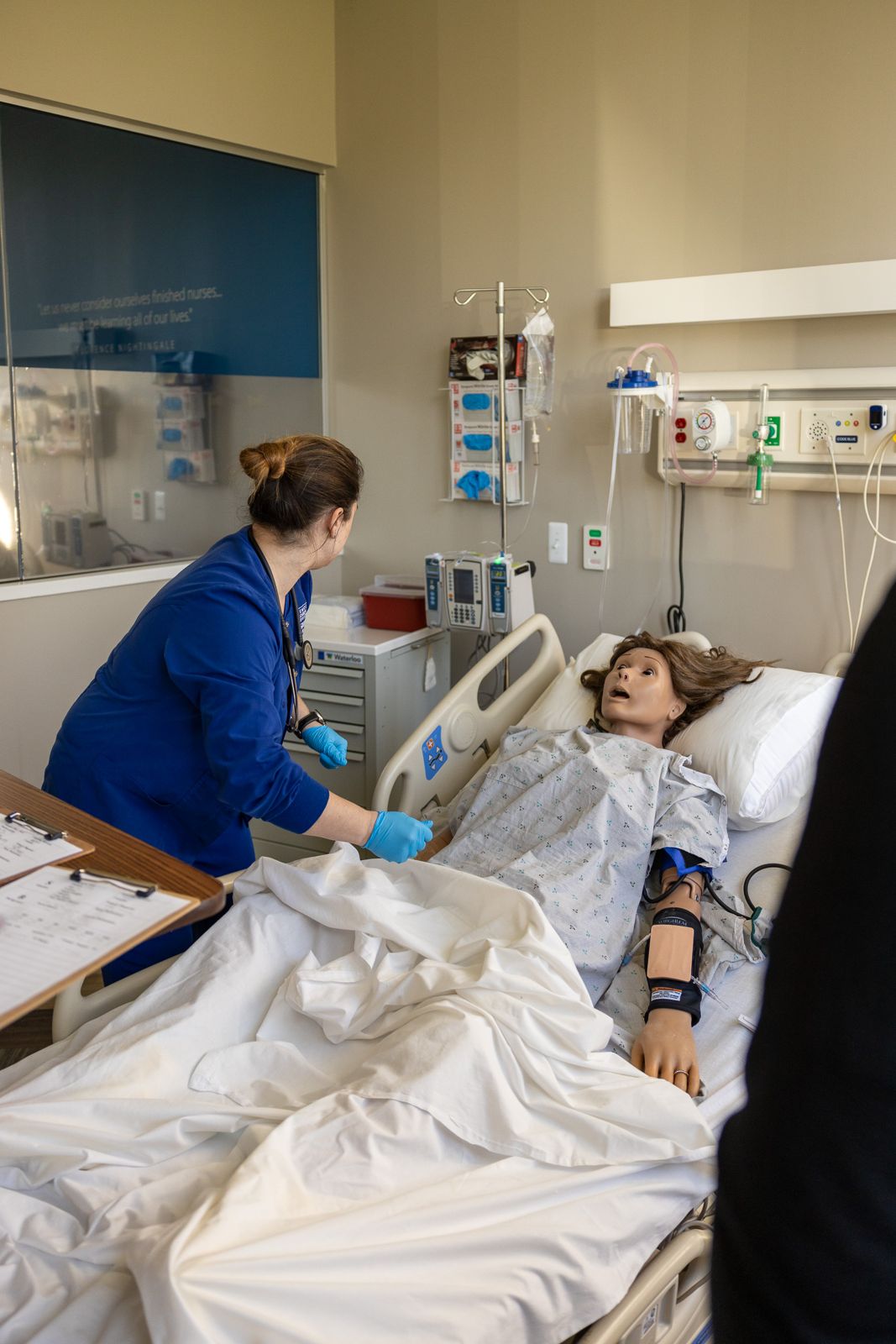
The clinical reasoning cycle was developed by Professor Tracy Levett-Jones and colleagues at the University of Newcastle and is described in Clinical Reasoning: Learning to Think Like a Nurse. It is widely used in Australian nursing programs because it makes the hidden thinking of experienced nurses visible – and it maps neatly to case-study assignments.
The eight steps
- Consider the patient situation – who is the person, why are they here, what is the context?
- Collect cues and information – review current information (handover, notes, charts), gather new information (assessment, vital signs, the patient's own account) and recall knowledge (pathophysiology, pharmacology, context).
- Process information – interpret the data, discriminate relevant from irrelevant, relate cues to each other, infer, match to previous situations and predict outcomes.
- Identify problems and issues – synthesise the facts into a clear statement of the most important problem(s).
- Establish goals – what should be achieved, and by when? Make goals specific and time-framed.
- Take action – choose and carry out the most appropriate nursing actions, including escalation.
- Evaluate outcomes – did the actions work? Has the situation improved?
- Reflect on the process and new learning – what would you do differently, and what have you learned?
The cycle is drawn as a loop because real reasoning is not linear – you will often move back to collect more cues after evaluating an action.
Worked example
1. Patient situation. Mr J, 72, day two after an elective right total hip replacement, history of type 2 diabetes and hypertension. At 0700 handover he was “a bit confused overnight”.
2. Collect cues. Respiratory rate 24, SpO2 93% on room air, heart rate 112, BP 104/62, temperature 38.4°C. Urine output 20 mL/hr for the past three hours. Blood glucose 14.2 mmol/L. He is drowsy and unsure of the day.
3. Process. Several observations sit outside normal ranges and together suggest a deteriorating patient. New confusion, tachycardia, fever, falling blood pressure and low urine output are cues associated with possible infection and sepsis. Post-operative day two and diabetes increase his risk.
4. Identify the problem. Mr J is showing signs of clinical deterioration consistent with possible sepsis, with reduced perfusion.
5. Goals. Prompt medical review within the timeframe set by the local escalation protocol; maintain oxygenation and perfusion; prevent further deterioration.
6. Take action. Escalate according to the observation chart and local policy (for example a clinical review or rapid response call), communicate using ISBAR, increase the frequency of observations, prepare for orders such as blood cultures, fluids and antibiotics, keep the patient safe (falls risk with confusion), and document.
7. Evaluate. After treatment: has heart rate fallen, blood pressure and urine output improved, confusion settled? If not, escalate again.
8. Reflect. Was “a bit confused” at handover an early cue that should have prompted a full set of observations sooner? What will you do next time?
Linking it to the NMBA standards
The cycle supports the registered nurse standards for practice, particularly Standard 4 – comprehensively conducts assessments, Standard 5 – develops a plan for nursing practice, Standard 6 – provides safe, appropriate and responsive quality nursing practice and Standard 7 – evaluates outcomes to inform nursing practice.
Sources and further reading
- NMBA – Professional standards (codes, standards for practice)
- ACSQHC – Recognising and Responding to Acute Deterioration Standard